Center for World Conflict and Peace

Center for World Conflict and Peace

Wednesday, January 25, 2012

Quick take on Obama's State of the Union Address

Got milk?

So, having been forced by Brad Nelson to watched the State of the Union Address, let me make some general comments on it.

First, nothing new in the speech -- it was totally predictable. I am not saying that it was a bad speech, mind you. Obama has his way with words, but the substance is just so thin. It is full of generalities and lacks much substance.

Here's an outline of the speech. Sure, admittedly, it's a smart-alecky take, but there's, I hope, some truth in the statements below.

1. We are gone from Iraq. Hooray -- even though so many cautioned against a full, fast pullout.

2. I killed Bin Laden. I demolished al-Qaeda. Bush who?

3. Jobs left, followed by mortgage crisis, but we are fine and dandy now, even though unemployment still hovers at 10%.

4. Obama defended the bailout of auto industry (FYI: many of GM's cars are produced in Mexico, Chrysler is owned by FIAT and Ford didn't get a bailout).

5. Manufacturing should be back, and unionized factories work great! Notwithstanding Steve Jobs' arguments or this interesting analysis in the Economist.

6. He wants to fix the tax code, and give tax breaks if companies bring jobs home.

7. Blame China for job losses, create CSI: Trade Enforcement Unit. (great article in the Slate bashing this approach).

8. More education: more money, nothing about prodding colleges to provide the right skills to students in a fast-changing and extremely competitive world economy.

9. Immigration reform please -- something that people had pushed him for but never taken.

10. Fair wages for women (which is admirable, though there are studies doubting whether the gap does exist).

11. Energy policies: America's oil production is at its height. No mention at all about the Keystone pipeline, the Solyndra scandal, or the fact that the economic slowdown causes Americans to use less oil.

12. More infrastructure-building -- I will let Walter Russell Mead respond.

13. The notoriously unfunny "spilled milk joke." (Obama stated: "We got rid of one rule from 40 years ago that could have forced some dairy farmers to spend $10,000 a year proving that they could contain a spill – because milk was somehow classified as an oil. With a rule like that, I guess it was worth crying over spilled milk.")

14. Creation of CSI: Special Mortgage Unit.

15. Yeah, WE ARE THE 99% BABY, TAX THE RICH. (Oh, before Obama builds a shrine to the almighty Warren Buffet, he should try reading this and this.

16. Hey Republicans, you should work with Obama, and by that, Obama means the usual game: Obama doesn't listen to you and he uses either procedural maneuvers or has a lackey justify his breaking of various precedents.

17. No, Obama doesn't lead from behind. Of course, he's always up front, especially when he knows that we are winning.

18. Obama to Iran: don't cause trouble in this election year. I warned you!

19. America is respected from the north to the south pole.

20. And remember, I killed Osama bin Laden.

Thursday, January 19, 2012

2012: A Preview

We have already looked back at 2011, now it's time to take a peek at the year ahead. Below are 10 issues that I will be following as the year unfolds. Please note that the list is ordered alphabetically, not in terms of priority or importance.

1. China and its neighbors: Over the past year, China's neighbors have begun to express and demonstrate alarm over the prospect of a dominant China bullying them into unwanted actions. In some cases, Asian countries, like Myanmar, have started to stand up to Chinese pressure and influence. In other cases, we have seen countries, such as Japan and South Korea and Australia, step up their balancing against China. And at the same time, the Obama administration has steadily increased its political, diplomatic, military, and economic ties to non-Chinese countries in Asia. How will these moves impact China? Will all of this moderate China's foreign policies toward its neighbors? Or will China emerge more steadfast and assertive in attempting to carve out a sphere of influence in the region?

2. Egypt: The revolutionaries did a good job of breaking the Mubarak government and dismantling the entire political system, but they have struggled immensely during the political transition to (I hope) full-fledged civilian rule. The military still holds considerable power and is unwilling to see it upstaged by other political actors; it also doesn't want its commercial and business interests infringed upon by a democratic government. Sparking concern in Egypt and abroad, the military has dealt harshly with continued protests and criticisms of its heavy-handed rule. Meantime, the parliamentary elections have allowed for the rise of the Islamists, most notably the Muslim Brotherhood and the more extreme Salafis. For now, the revolutionaries have been squeezed out of the political picture. Can the revolutionaries get their act together, becoming a more potent political force in Egypt? Will they become more organized? Will they find a credible political leader capable of galvanizing supporters and forcefully articulating the ideas and arguments of more progressive forces?

3. Elections/transitions in power: There are lots of interesting and important elections scheduled for 2012. Here is just a small sample of them: Russian presidential elections in March, Egyptian presidential elections in March, parliamentary elections in Myanmar this April, presidential and parliamentary elections in the Palestinian territories this April, French presidential elections in April, and U.S. Congressional and presidential elections in November. Additionally, in China is about to embark on major political changes in 2012. According to Fareed Zakaria: "About 70% of the country’s senior leadership— the top 200 or so members of the Central Committee—will be replaced by autumn. The new leaders—Xi Jinping and Li Keqiang—are the first generation that was not personally blessed and selected by Deng Xiaoping, the architect of modern China."

4. Iran: On various issues, Ayatollah Khamenei and President Mahmoud Amadinejad battled for power throughout 2011. It is clear that Khamenei did a decent job of clipping the wings of Amadinejad and his allies, and he and the hardline clerics are now ascendant, just as we would expect based on the structure of Iran's political system. How will this political drama play out in the year ahead? And how will this impact Iranian foreign policy?

5. North Korea: Undoubtedly, the country's immediate trajectory will be shaped by the political transition to the young and inexperienced Kim Jong Un, the son of the recently deceased Kim Jong Il. Given that Kim the younger is so green and likely lacks well-established and durable ties to North Korea's political and military elite, there's no guarantee that this transition will go as planned or very smoothly. For example, will Kim Jong Un be able to consolidate power effectively? How much power will he hold? Will he share power, as been suggested, with another institution or person(s)? Will the military encroach on his turf? If so, how will China, a major supporter of Kim, respond? Furthermore, will North Korea lash out militarily at other countries like South Korea? Or will the change in leadership lead the country to cultivate better relations with its neighbors? Or perhaps it's just more of the same? More uncertainty, more unpredictability, and more erratic behavior from a repressive

6. The Nuclear issue: There has been little progress in resolving the outstanding issues related to the nuclear programs of Iran and North Korea. The West, China, and Russia, among others, have a long way to go. Will North Korea head back to the negotiating table this year? Or does its political transition table that issue for quite a while? Iran is negotiating a return to talks, with speculation that they will be held in Turkey sometime soon. Will these be sincere talks? Or just something to buy the political-clerical regime more time to make advancements in its nuclear capabilities? Will talks soothe the drumbeats of war from American and Israeli hawks? If not, how will Obama react? Will he get sucked along with the crowd and ramp up military activities against Iran? Or will he resist the lure of war? But that only begs more questions: What's Obama's redline here? If Iran does go nuclear, what does the U.S. do in response? Is he willing to support Israeli military action against Iran? 

7. Pakistan: Pakistan is facing a rocky period right now, facing trouble from a host of different directions. It is dealing coping with an insurgency from the Pakistani Taliban, a poor economy, frosty relations with the U.S., and an internal power struggle. The government is feuding with the military and the courts, the Supreme Court in particular. Clearly, the Pakistani government is weak and fragile, which limits its ability to deal effectively with consequential issues like international terrorism, nuclear proliferation, the ongoing conflict in Afghanistan, and India-Pakistan relations. What if the Pakistani government can't withstand all of the pressures it faces? What kind of government will rise to power? And how does this impact Pakistan?

8. Syria: Taking their cues from Arab Spring countries in the Middle East, anti-government and pro-democracy protesters have tried to break Bashar al-Assad's brutal grip on power. Unfortunately, Assad isn't going anywhere, at least for the foreseeable future. He has faced down the protesters with military force, resulting in over four thousand deaths so far. But the state-sponsored violence has done a couple of things. First, it's caused the opposition to unite and organize. In fact, the opposition now has an armed wing filled with military defectors, and they have carried out violent acts against government and military installations. Of course, this only raises the specter of civil war, which could destabilize the entire region. And second, the international community, including the Arab League, is concerned about the endless human rights violations. It will be interesting to see how countries and international institutions respond to Syria if the violence continued unabated and the death and casualty toll skyrockets. There are already murmurs of support for various types of international intervention. While this scenario isn't probable, it's one that's possible.

9. The Theme for 2012: 2011 was the year of democracy protests and the protester in particular. What does 2012 have in store? At this point, I could make a million different guesses, but there's no point in doing that. Right now, it's sufficient to say that I have my eye open for the next big thing in world politics. I hope it's something that enhances the mission of world peace and cooperation.

10. World Economy: There are many trouble spots in the world economy. The American economy is still sluggish. The Europeans still haven't come close to remedying its economic troubles. And most ominously, China's economy is slowing down. Remember, just as China can't afford to have struggling economies in the EU and the U.S., the EU and the U.S. can't have the Chinese economy go significantly downhill. With that in mind, how will China's economy perform in 2012? And how will that impact the economies in the West? And if the big three struggle, where will economic growth come from? Moreover, if the world economy continues to flag, with income inequalities rising and middle and lower class anger mounting, will 2012 be another year of mass protests, anti-government activities, and unrest?

Thursday, January 12, 2012

Why Islamists are Winning: A Rebuttal to John Owen

Last Friday, University of Virginia Professor John Owen, one of my academic and intellectual mentors, penned a New York Times opinion piece on the success of Islamic candidates and parties in recent Middle East elections. Throughout his career, the bulk of Owen's work has focused on the role of ideology in conflict and peace relations in international and transnational politics. (Among other examples, this is his latest book and here is his first book, which I proofread, edited, and contributed comments.) In his opinion piece, Owen now looks at the role of ideology in domestic political environments.

Owen puts forth the argument that "frustrated people" have rallied around a long-established single ideology: Islam. He writes: "Today, rural and urban Arabs with widely varying cultures and histories are showing that they share more than a deep frustration with despots and a demand for dignity. Most, whether moderate or radical, or living in a monarchy or a republic, share a common inherited language of dissent: Islamism."

He correctly points out that political Islam isn't a new phenomenon. It dates back well before the Arab Spring and the 9/11 period more generally. "Invented in the 1920s by the Muslim Brotherhood, kept alive by their many affiliates and offshoots, boosted by the failures of Nasserism and Baathism, allegedly bankrolled by Saudi and Qatari money, and inspired by the defiant example of revolutionary Iran, Islamism has for years provided a coherent narrative about what ails Muslim societies and where the cure lies."

As such, political Islam has functioned to provide opponents of repressive governments a sense of identity and a shared way of looking at the world. It has also served as a political narrative for opponents. And it's done all of things for a long time. Indeed, political Islam has become entrenched within opposition circles. This is precisely why Owen argues that Islamism is like a channel "dug by one generation of activists and kept open, sometimes quietly, by future ones. When the storms of revolution arrive, whether in Europe or the Middle East, the waters will find those channels. Islamism is winning out because it is the deepest and widest channel into which today’s Arab discontent can flow."

There are two problems with his piece, however.

(1) Owen has outlined why political opponents--the people and groups who are now winning elections--are Islamists. They're simply traversing a well-worn political path that's been put down years ago. They've simply adopted the language of political dissent from their ancestors. Which makes sense. As people and groups have found meaning in political Islam, it's taken hold in communities and then was eventually passed down to subsequent generations.

But what Owen doesn't broach, despite the title of his piece, is why the Islamists are winning. To answer this question, he needed to look at the variation in the groups and candidates competing for public office in places like Egypt and Tunisia. After all, the issue at the heart of his piece is: why are the Islamists winning elections and the secularists and liberals aren't? What's the difference between the former and the latter? Is it simply that one side is Islamist and the other isn't? That's the story that Owen paints, and it's, at best, incomplete.

(2) The reason Islamists are doing so well is because of their institutional structures and organization and their capabilities. Take Egypt as an example. Simply put, the Muslim Brotherhood and the Salafis have been successful in the parliamentary elections because both were better organized and possessed a larger base of resources relative to their political rivals. They accrued these advantages over years, often laboring underground, out of sight of the government. Once the political system opened up this past spring and the Islamists were able to campaign freely and publicly for public office, they had a considerable head start over other factions. They didn't have to reinvent the wheel, so to speak. They had a well-oiled political machine up and ready to go. The revolutionaries and other liberals, by contrast, had to create their own political apparatus from scratch. It's no accident that the Islamists were much better at getting people to work on various electoral campaigns, crafting political messages, transmitting and selling these messages to the public, canvassing for votes, and garnering support from the masses. It's these organizational advantages that translated directly into success at the ballot box.

More to the point, think about this counterfactual: let's assume for the sake of argument that political Islam has been the dominant opposition discourse, just as Owen suggests, but change which side was best organized and prepared for the parliamentary elections. In particular, let's say that the liberals and secularists, not the Islamists, had the superior institutional infrastructure. Would we see any difference in electoral outcomes? Without a doubt. The liberals and secularists might not have won elections, but they certainly would have narrowed the gap in support, putting them on a much more equal footing with their Islamist political rivals.

Sunday, January 8, 2012

Al-Maliki's Power Play

Nuri Al Maliki

Nouri al-Maliki/Photograph:AFP


With the departure of American forces from Iraq, Prime Minister Nouri al-Maliki has proceeded to consolidate and expand his political power. His moves have largely come at the expense of Iraqi Sunnis. Just look at what he's done lately: al-Maliki has branded the country's highest-ranking Sunni official, Sunni vice-president Tariq al-Hashimi, with running death squads, ordered an arrest warrant for al-Hashimi, maneuvered to remove the deputy prime minister Saleh al-Mutlak, another Sunni, threatened to exclude the Iraqiya bloc (a Sunni faction led by al-Hashimi) from his government, and "warned that 'rivers of blood' would flow if Sunnis seek an autonomous region.

Al-Maliki's power play has been primarily framed in terms of the Shia-Sunni sectarian struggle that has plagued Iraq since the ouster of Saddam Hussein. But keep in mind, though, his actions and statements shouldn't be viewed in isolation. Rather, al-Maliki's recent strong-arm tactics and his attempts to maximize his power, which by themselves are troubling enough, are just the latest in a string of moves over the last several years to strengthen his power over all parts the state. Arguably, while al-Maliki has intentionally targeted Sunnis, his power play extends beyond the sectarian struggle. It seems he's mostly bent on becoming an unquestioned autocrat, eliminating whomever (Sunni or Shia) looks to circumscribe his power in any way. And as James Fearon puts it, "now that U.S. troops are gone, this somehow makes it is easier or more possible from him to ditch the agreement and carry out his authoritarian designs," such as overturning the American-brokered power sharing deal.

Consider this. Al-Maliki now:


runs the Defense and Interior Ministries and has created a separate security force that answers to him alone. He has bypassed parliament to install Shiite allies in key positions, and he has used his control over state funds and resources to gain leverage with the judiciary and oversight agencies like the anti-graft Integrity Commission....His control over funds for assigning security details for judges, for example, or offering them safe housing out of militants' reach and inside Baghdad's heavily protected Green Zone has meant that many senior judges became beholden to al-Maliki.

And despite promises not to run again, sources indicate he'll probably run for another term in office. Al-Maliki also works behind the scenes to protect his allies, loyalists, and sycophants, usually fellow Shias, against claims of misconduct and corruption, either preventing them from being charged or getting charges against them dismissed.
What are the consequences of al-Maliki's power grab?

(1) It has fractured, and could destroy, the unity government. The Iraqiya bloc to which al-Hashimi belongs is boycotting parliament and cabinet, complaining that al-Maliki does not share power, and it is threatening to pull out of the unity government entirely. And Al-Maliki, as mentioned above, has threatened to expel them from his government. For now, al-Maliki has backed off these threats. According to news reports:

Despite ministers belonging to the Iraqiya bloc skipping Tuesday’s Cabinet meeting, Maliki declined to follow through on an earlier threat to sack them, instead declaring they were on “extended leave,” Maliki’s spokesman said.
“We cannot allow the government’s work to stop,” Ali Mussawi said.
“Their absence gave us two choices – either fire them or consider them on leave. The Cabinet voted that they were considered to be on extended leave.”

(2) It has reignited Sunni-Shia relations. Over the last three weeks, a wave of violence has hit Iraq, as Sunni militants, reportedly either working with or through al-Qaeda, have bombed Shia neighborhoods. The attacks of December 22 and January 5 were especially deadly, killing 69 and 72 people, respectively. 

(3) The violence has fostered fears, both in Iraq and abroad, that the death and destruction could reach 2005-2007 levels and, even worse, that Iraq could deteriorate into civil war. A major concern is that Iraqi Sunnis, once again, believe they have no viable peaceful means of recourse to protect their interests, as the political and legal games, in their view, are rigged to their disadvantage. Added to that, Sunnis see American support for the Iraqi government as providing al-Maliki with the requisite cover to do as he pleases internally. Unfortunately, these two observations, in combination, are leading a growing number of Sunnis to consider violence as a way to settle old and new scores and defend interests.

(4) But if al-Maliki overreaches, he could erode his own bases of support. Already, some of his Shia backers, most notably the political wing headed by Muqtada al-Sadr, have called for new elections as way to resolve the current political turmoil. As we know, the Shia political elite are extremely consequential to al-Maliki. Should he lose key Shia backers, then he'd lack power to continue to govern and rule. Thus, it's in his incentive to assuage their concerns, which could moderate al-Maliki's behavior. 

A few central issues, then, need to be answered. Is there any daylight between the political interests and values of key Shia political elites and al-Maliki? If so, will Shias forcefully advocate their political preferences while at the same time seek to water down if not block those of al-Malikial-Malikis continued misuses and abuses of power. The bright side is that there are at least some Iraq Shia politicians who, for various personal and political reasons, won't support dividing Iraq and running the country into the ground. But are there enough to provide a solid counterweight to al-Maliki?

Thursday, January 5, 2012

The Most Important Events in 2011

Check my Jakarta Globe's article for the Indonesian perspective (in English).

1. EURO Crash


Watching how European leaders work together to salvage the Euro is like watching a train wreck in slow motion. While there were many criticisms levied on Ben Bernanke and Hank Paulson for wrong headed policies in dealing with the mortgage and liquidity crisis of 2008, nobody could accuse them of taking their time in dealing with the situation.

In fact, the slowness of European leaders to do anything at all, in combination with the resistance of Southern Europe to take any meaningful reform, not to mention the entrenched interests of the labor unions, etc., brings into question the entire European Union project.


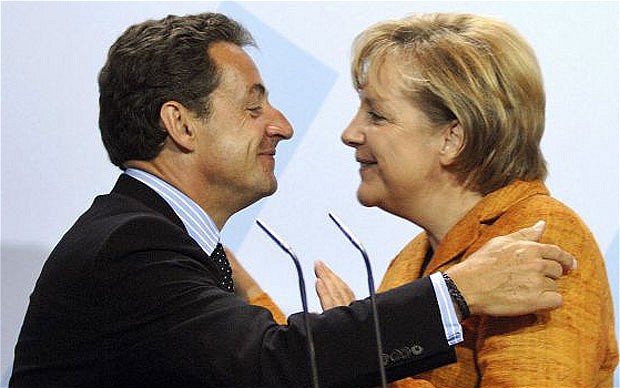
Instead of having a festival of liberte, egalite, and fraternite, the marching orders were issued from Berlin and Paris. Still, regardless of the photo-op, both Berlin and Paris pursued different priorities, exacerbating the crisis. In the end, their loose unity likely stemmed from their mutual dislike of Silvio Berlusconi and George Papandreou.


2. China's High Speed Rail Crash


Speaking of a train wreck, the city of Wenzhou rose to international infamy thanks to the deadly rail accident and the Chinese government's bumbling rescue efforts, followed by a disastrous press conference that would have made the Three Stooges proud.

While the Chinese citizens were fuming, investors outside took notice, especially since the disaster came on the heels of the Muddy Waters' allegations that Chinese companies might have cooked their books.

Why is this incident so important? In short, this could be a stark symbol of China's coming economic crash. After all, there are growing questions and concerns about the long-term sustainability of China's economic growth. And it's becoming increasingly evident that the Chinese economy has been long built on a shaky foundation of Beijing's heavy-handed policies, corruption, and incompetence--the very things at the heart of the rail crash.


3. America Deadlocked


With the election coming soon in 2012, none of the politicians in Washington were willing to give others the credit of getting anything done. They also constantly pandered to their bases in order to keep them enthusiastic and mobilized, willing to vote in numbers for 2012. Result: bad policies, and a U.S. credit downgrade. 


Angry Twitter, Washington Way

Expect more partisan sniping and posturing in 2012, even though everyone will run as "a uniter, not divider."


4. Arab Spring


The popular unrest in the Middle East has managed to topple three dictators already (Ben Ali of Tunisia, Mubarak of Egypt, and Qaddafi of Libya), showed the door to two dictators (Ali Abdullah-Saleh of Yemen and Bashar al-Assad of Syria), forced reforms in two countries (Morocco and Jordan), and causing a major foreign intervention (Bahrain).

While the tally is impressive, the long-term and region-wide effects remain uncertain. All of these cases are far from settled, and keep in mind that there many obstacles that must be cleared before democracy can take root. As Walter Russell Mead noted in his great blog, with the rise of militias and other retrograde elements, Arab liberals have been pushed to the edge, leading to an Arab Winter.

At the same time, this social movement is supposedly inspired anarchist movements that spread throughout the world, from the Great Robbery of London that I skewered in my older blog post, to the anarchist Occupy movement, whose demands aside of taxing the rich remain unclear.

Lastly, the Arab Spring clearly demonstrated that al-Qaeda was on the wrong side of history. It showed the wrongheadedness of al-Qaeda's ideology as well as its lack of support throughout the Middle East and North Africa. Moreover, "AQ played no role in the uprisings. The organization was merely an observer to seismic shifts in the region." Al-Qaeda leadership was so flummoxed by the Arab Spring that it struggled immensely to respond to the shifting domestic political landscape in places like Tunisia, Egypt, and so on.


5. Myanmar halting the construction of Irrawaddy Dam


Neil Armstrong once said something about one small step for a man that made one great leap for mankind when he landed on the moon (causing some Balinese to wage a protest, as people were not supposed to blemish the face of the Moon Goddess).

Myanmar's small step in halting the construction of Irrawaddy Dam caused a major foreign policy breakthrough. Yes, it solidified Myanmar's bid to be the next Chairman of ASEAN in 2014. But more importantly, it helped to thaw its relationship with the U.S., which in turn provided momentum to its nascent reform efforts, and demonstrated that the civilian government wasn't afraid to publicly stand up to its Chinese neighbors. The latter is especially important, because it signals to members in the region that they can and should resist Chinese pressure and influence when necessary. As long as China tries to flex its muscles and spread its wings, this will be one in a long line of moves by Asian countries to thwart Beijing from encroaching on their turf.

By now, I'm sure you noticed that I didn't mention the killing of Osama bin Laden. In my view, in the larger picture, the demise of bin Laden is simply the final nail in a long downfall for al-Qaeda. For quite some time before OBL's death, al-Qaeda was no longer a powerful or significant player on the world stage. It was hemmed in politically, financially, strategically, and operationally by the U.S. and its allies in their so-called war against terrorism. It's leadership ranks had been decimated. It's ideology had been discredited and was unpopular. Really, al-Qaeda had an inflated sense of prestige, largely because of 9/11, but was in pathetic shape.

Thursday, December 22, 2011

The Past and Future of Iraq


After eight years of blood and sweat, and many destroyed hopes and lives, the United States has finally departed Iraq. It will take years before we can finally determine whether America's intervention in Iraq was successful. In the meantime, in this blog post, I'd like to retrace some of the important steps in the war and begin to explore some the war's short-term regional implications.


George W. Bush hoped that by destroying the Hussein regime in Iraq, he could build a more cooperative, peaceful, and democratic regime in Iraq, while also protecting U.S. civilians from the infamous "Weapons of Mass Destruction."


Ahmad Chalabi


Beyond the entire fiasco of the "Weapons of Mass Destruction," Bush had a long-term strategic goal of changing Iraq to a stable, functioning democracy. Bush and his neoconservative advisers believed that democratizing Iraq might be a way to end the tangled web of several Middle East problems once and for all.


Their belief was based on several arguments: (1) Democracy is a superior form of government. Free, fair, and open elections ensure that leaders are accountable to the masses. Democratic institutions help to ensure the protection of human rights. Democracies tend not to fight each other. So the more democracies in the Middle East, the better it is for regional and world peace and stability. (2) Because people were already tired of a very brutal dictatorship, Iraq would be the easiest state to transform to a democracy. And this experiment in regime change would probably be a relatively low-cost effort, funded mostly by Iraqi oil exports. (4) Once democracy takes hold in Iraq, demonstrating to the Muslim world the compatibility of Islam with key democratic ideas and institutions, it would spread to other Middle Eastern countries, creating an ever larger zone of democracy in a region that's been a hotbed of repressive authoritarian rule. (5) A democratic Middle East would go some way toward diffusing the Palestinian-Israeli conflict. After all, for decades, Arab dictators had been playing the Israel card as a way to divert people from their incompetence in running their nation, which only inflamed anti-Israeli sentiment and hostilities in the region. By opening up Middle Eastern politics, leaders would have to focus less on propaganda and more on getting things done for their constituents.

Of course, all of those rosy plans quickly blew up, thanks to several major factors, notably Iran, which didn't like the idea of an American military base next door in Iraq.


Strategically, a weak Iraq would benefit Iran: it could expand its power to the west, as it no longer faced an existential threat from a strong Iraq, which Iran believed to be backed by the monarchs in the Middle East.


Iran began to engage in Iraqi domestic politics, such as by sheltering and funding Moktada al-Sadr, the militant anti-American Shiite Cleric. 


At the same time, thanks to U.S. Secretary of Defense Don Rumsfeld's miscalculation of sending just enough troops to topple Hussein but not enough to police the country, Iraq then descended into chaos. It didn't help that Iraq, with American council, imposed strict de-Baathism, a policy of getting rid of many presumed supporters of Saddam Hussein from all parts of the government and state bureaucracy. This policy mostly targeted the Sunnis and created a huge backlash. In effect, this move radicalized the Sunni population and gave al-Qaeda the opportunity to enter the scene more forcefully.


Bush mistakenly believed that Saddam was sheltering al-Qaeda. The ironic part, however, is that the disorder in Iraq allowed al-Qaeda to jump into the fray, as the local Sunni militias sought to gain outside support to help the "resistance."

In the end, al-Qaeda's violence and extremism only decimated its support inside Iraq, even among the Sunnis. In fact, some Sunnis even saw the United States as the lesser of two evils, leading to the formation of Awakening Council, the Sunni militias that assisted the United States in fighting al-Qaeda.


Another major element of the war was George Bush's so-called surge, which added significant numbers of U.S. troops in Iraq. This was crucial, for two reasons: (1) it boosted the security of Iraq and (2) and put al-Qaeda on defensive. The surge debunked al-Qaeda's operating logic, that the more the organization violently struck American forces and installations, the more likely the U.S. would withdraw due to rising casualties and deaths.


Bush's military surge allowed the situation to stabilize. Still, the humpty dumpty had fallen and all the king's horses and men could not put him back again and Iraq remained a troublespot. Once Barack Obama came into office, he essentially maintained Bush's ideas about and policies toward Iraq. But when it came time to proceed with a planned drawdown of American forces, Obama had no stomach to keep any troops in Iraq to continue their training and advisory duties. With election season already here, it's possible he caved into pressure from his liberal backers and supporters. But another sticking point was Iraq's refusal to grant American forces immunity from alleged crimes, making them susceptible to arrest and prosecution from any police and justice officials harboring anti-American views.


What's the prognosis for Iraq?

First, it is still bad. The withdrawal of American troops was a political decision, while the situation on the ground, regardless of all the rosy prediction, remained unstable. This will become worse as Prime Minister al-Maliki had sidelined and discriminated the Sunnis and former Baathists. America's presence in Iraq provided a punching bag, and at the same time, a buffer to these people. Expect things to blow up should al-Maliki overreach in his political designs.

Second, Iraq will remain a proxy battleground for Iran. Even though many Shiites in Iraq have soured on Iran, many, including Moktada al-Sadr, remain dependent on Iran as the source of their power. The fluctuation within Iran's domestic politics, notably the cold war between President Ahmadinejad and Ayatollah Ali Khamenei, could blow up and someone might use Iraq as a way to rally everyone around flag and launch an invasion. It's not improbable, especially if the Iranians believe (1) the U.S. is too weary and no longer interested in Iraq and (2) Iraq is too divided to muster an effective defense. This could be more tempting should the Assad regime in Syria, another Iran's client, collapse.

UPDATE on my first point above: Things have already started to go south, though much sooner than I anticipated. We can expect Iraq to get really hairy, should al-Maliki crack down hard on the violence and pursue widespread anti-Sunni policies (which, to a certain extent, is already happening).

North Korea: The Known and Unknown

Image Detail
Kim Jong Un/Unknown photographer

Given the political and security uncertainties surrounding a post-Kim Jong Il government, there is, understandably, quite a bit of concern about North Korea. This is evident in media reporting and analysis. And it's also clear in the actions by and statements from Washington and its allies in Asia. South Korea put its military on high alert. Meantime, Team Obama has been busy communicating with key players in the region, like South Korea and Japan, to make sure everyone is on the same page--that they are all on guard and ready for any rapid changes in stability and security in Asia, yet still able to exercise much-needed restraint and caution.

At bottom, Washington is worried about the internal succession dynamics and the impact that they could have on the region. Specifically, the worry is that a paranoid North Korea will lash out militarily in an effort to showcase the country's strength and power despite the political transition. Moreover, the use of force could be a way for Kim Jong Un, the probable new leader, to demonstrate his leadership skills to North Korea's political and military elites.

Should North Korea make any provocative moves, and should other countries, such as Japan and  South Korea, in turn, respond assertively, the entire region could very quickly find itself on the brink of war. And remember, this is a region, broadly defined, with four powers (China, India, Russia, and Japan) and four nuclear powers (China, India, Russia, and North Korea). One small ill-advised move, one small miscalculation, could have disastrous consequences.

Right now, here is a reasonably good guess about what will happen in North Korea. Now that Kim Jong Il is gone, North Korea will undergo a political transition in power. Tapped by his father, the heir apparent, Kim Jong Un, known now as the "Great Successor," is expected to take the reins of power. He will try to form a coalition of support, starting with the military, which is where a considerable amount of power is vested, so as to consolidate his power. Given his age and inexperience, Kim Jong Un will likely lean on other people, probably military officials, family relatives, and his father's wise men, to guide him through the early days of his leadership.

Anything beyond the above is just wild speculation. There is so much we don't know about North Korea that it's impossible to make a good, sound estimate on the future domestic and foreign politics of the country. We know very little about Kim Jong Un, who is an unknown figure on the world stage. Even more worrisome, we don't have a good handle on what's happening inside North Korea. Indeed, the fact that we know so little about the country is one of the main stories that emerged after the death of Kim Jong Il. After all, the U.S., as well as probably every other country, didn't know about his death until North Korea's state media released the information almost a day and half after the fact.

In the end, this isn't too surprising. North Korea is an extraordinarily closed country, one that doesn't allow the outside world to get a good look at it and restrains and filters and distorts the information it releases to its public and the rest of the world. This should be a well-known observation by now. It's not as if this is the first time North Korea's opaqueness has been revealed. Just consider past information/intelligence gaps: "Pyongyang built a sprawling plant to enrich uranium that went undetected for about a year and a half until North Korean officials showed it off in late 2010 to an American nuclear scientist. The North also helped build a complete nuclear reactor in Syria without tipping off Western intelligence."

In my mind, there are lots of questions that need to be answered before we can start to think about how events will unfold going forward in North Korea. Here are some example questions.

1. Are there any existing actors or institutions that can take advantage of the power vacuum to move North Korea into a more modern and law abiding direction?

2. Is the son like dad? Is he as vengeful and vindictive? Is he as suspicious of outsiders and foreigners?Does he support bellicose policies?

3. What kind of relations does the son have with military officials? And does the military still support him now that Kim Jong Il is gone?

4. Does Kim Jong Un have any political skill or ambition? Can he build political coalitions? Can he play factions off one another? Can he maintain support from the people? Will he seek dominant power over the state, like his dad? Is willing to let other actors siphon power away from him? 

5. Specifically, who will guide Kim Jong Un during the political transition?

6. Are there any political alternatives to Kim Jong Un? And would, say, the military be willing to go against Kim Jong Il's wishes and overthrow the son and install its own preferred leader?

7. The China factor: we know China wants to preserve the status quo, which means supporting Kim Jong Un and the continuation of the Kim dynasty, if only to prevent a gathering storm on its borders. But that simple observation leaves us with a fuzzy and vague notion of how China will approach North Korea. Will China become even more active in North Korean politics? Will China urge or push North Korea to make any political or policy changes?

8. Now that Kim Jong Il is out of the picture, will South Korea's President Lee Myung Bak pull back on his so-called hardball tactics toward North Korea, perhaps offering the son an olivebrach as a way to reset North-South relations?
 
9. Lastly, reports surfaced Wednesday that North Korea might shift to a ruling council, or collective rule, headed by Kim Jong Un. While we know what this means in theory, it's difficult to say what it represents in practice. Is this a temporary move, a way to break the son into power gently and gradually? Or is this the first step in delimiting, if not completely undermining and eroding, the power of Kim Jong Un?

Certainly, I hope that North Korea decides to embark on a more modern and progressive and peaceful way of conducting its affairs. But in the meantime, before it's clear where North Korea is headed, I hope the U.S. and the West more generally can improve its intelligence capabilities. To be sure, a part of this requires Kim Jong Un and his military supporters to relax their grip on the state. But another part is grounded in creative and flexible thinking and strategizing--that is to say, finding novel ways to work around the impediments to information acquisition imposed by North Korea. For in the end, better intelligence would help the West glean answers to the above questions, thereby enabling it to prepare better for a variety of different political, security, and economic outcomes that may emerge over time.